Home » Common Mistakes to Avoid When Drafting Free Agreement Templates
Common Mistakes to Avoid When Drafting Free Agreement Templates
A Practical User Guide for Beginners and Non-Legal Professionals
Drafting a clear and effective agreement is essential for protecting your interests—whether you’re creating a simple service contract, rental agreement, partnership document, or any other professional template. Many people rely on pre-made templates (such as the free ones on AgreementSamples.com), but without proper guidance, small errors can lead to significant misunderstandings.
This page highlights the most common mistakes people make when drafting agreements and offers simple, beginner-friendly advice on how to avoid them. Whether you’re customising one of our templates or writing your own, use this guide to create cleaner, stronger, and legally safer agreements.
1. Not Defining the Parties Clearly
One of the most basic yet overlooked steps is failing to identify the parties involved with full legal clarity.
Common Mistake
Using only first names, nicknames, or incomplete business information.
Why It’s a Problem
It creates confusion over who is legally responsible if something goes wrong.
Every agreement should clearly outline dates for tasks, services, or the contract duration.
Common Mistake
Leaving timelines open-ended or using phrases like “the project should be completed quickly.”
Why It’s a Problem
There’s no accountability, and delays can’t be disputed.
How to Avoid It
Mention exact start and end dates
Add milestone dates for large projects
Clarify extension or renewal terms
6. Ignoring Termination and Cancellation Clauses
No agreement is complete without explaining how it can end.
Common Mistake
Skipping termination terms entirely.
Why It’s a Problem
If one party wants to leave the agreement early, it results in conflict.
How to Avoid It
Add details such as:
Conditions for termination
Notice period (e.g., 7 days, 30 days)
Consequences of early termination
Refund rules
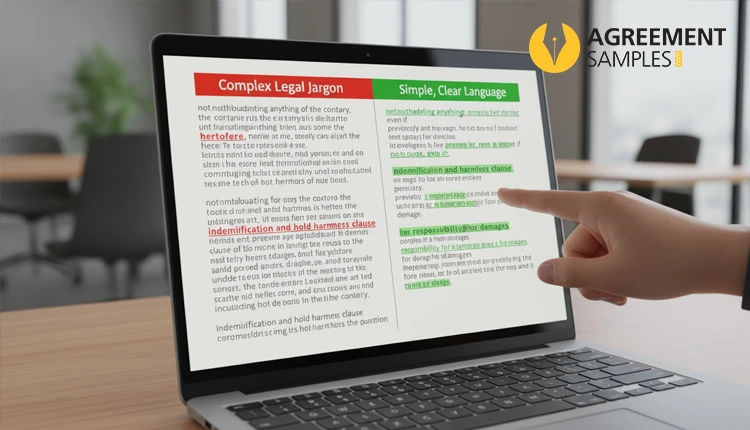
7. Using Overly Complex Legal Language
Many beginners believe a contract must sound “legal” to be taken seriously.
Common Mistake
Using unnecessary jargon or long sentences copied from other templates.
Why It’s a Problem
It confuses users and increases the risk of misunderstanding.
How to Avoid It
Use simple, everyday language
Keep sentences short
Make the document easy to read for non-legal users
Use bullet points whenever possible
8. Copying Clauses Without Understanding Them
While templates are helpful, copying irrelevant clauses from the internet can be risky.
Common Mistake
Adding legal terms that do not apply to your specific situation.
Why It’s a Problem
It can invalidate important parts of the agreement or cause contradictions.
How to Avoid It
Only include clauses you understand
Customise templates according to your needs
Remove anything that does not match your situation
9. Skipping Governing Law and Jurisdiction Sections
Many users forget to mention which laws apply to the agreement.
Common Mistake
Leaving out the “Governing Law” clause.
Why It’s a Problem
If a dispute arises, parties may disagree on which country or state laws to follow.
How to Avoid It
Clearly state: “This agreement will be governed by the laws of [State/Country].”
10. Not Proofreading or Reviewing the Document
Even small spelling mistakes or formatting issues can make a document look unprofessional.
Common Mistake
Rushing to finalise the agreement without reviewing it.
Why It’s a Problem
It can lead to errors, omissions, and inconsistencies.
How to Avoid It
Read through the agreement twice
Use spell-check tools
Make sure all names, numbers, and clauses match
Ask a colleague or friend to check it if possible
Frequently Asked Questions About Free Agreement Templates
1. Can I use a free agreement template without hiring a lawyer?
Yes, you can use a free agreement template as a starting point without hiring a lawyer, especially for simple, low-risk arrangements. However, templates are general in nature and may not cover all of your specific circumstances. If your agreement involves significant money, long-term commitments, sensitive information, or complex legal issues, it is always safer to have a qualified legal professional review the final document before signing.
2. Are the free agreement templates legally binding?
An agreement template itself is not automatically legally binding. It becomes potentially binding when it is properly customized to reflect the actual deal between the parties, signed by the relevant parties, and compliant with the applicable laws in your country or state. Templates on AgreementSamples.com are for informational and educational purposes only and do not constitute legal advice. When in doubt, it is best to consult a lawyer in your jurisdiction.
3. What should I customize first in a free agreement template?
Start by customizing the basic but critical details: the full legal names and contact details of all parties, a clear description of the services or obligations, payment terms (amounts, due dates, and method), timelines or deadlines, and governing law or jurisdiction. After that, review any special clauses such as termination, confidentiality, dispute resolution, and limitation of liability to make sure they match your real-life understanding of the deal.
4. Are these templates valid in every country or state?
No single template can be universally valid in every country or state. Contract laws and formal requirements can vary widely between jurisdictions. Our free agreement templates are designed to be general and adjustable, but they may need modifications to comply with local laws or industry-specific regulations. If you are unsure whether a template is suitable for your location, you should seek advice from a local legal professional.
5. Where can I download free agreement templates in MS Word format?
You can download free, professionally designed agreement templates in MS Word format from AgreementSamples.com. Each template includes an attractive cover page and can be edited easily to fit your needs. Downloads are free of charge and do not require you to create an account. Simply browse the relevant agreement category, choose a template, and click the download button.
Final Tips for Beginners
To make sure your agreement is clear, consistent, and professional:
Use a reliable template as your starting point
Customise every section to match your actual situation
Keep the language simple
Be specific and avoid assumptions
Review the document from the perspective of both parties
This guide is designed to help you avoid common mistakes and create stronger, more effective agreements using the free templates available on AgreementSamples.com.