
Essential Agreement Clauses Made Simple for Beginners

Your Easy Guide to Creating Clear and Effective Agreements

Whether you’re agreeing on business, services, partnerships, or rentals, a good agreement is more than just filling in a template. The trick is to include the right clauses that clearly spell out responsibilities, protect everyone involved, and prevent future misunderstandings.

Multiple agreement template cover pages displayed on a professional workspace desk

Even if you’re using one of our free templates from AgreementSamples.com, it’s important to customize it properly. This guide walks you through the most important clauses every agreement should have, with tips that anyone can understand—even if you’re not a legal expert.

1. Parties Clause

Why it matters: This is where you say exactly who is involved.

It’s crucial to clearly define all parties so there’s no confusion about who’s responsible for what.

Example of clearly defined parties in an agreement template with two people shaking hands

How to do it right:

  • Use full legal names (and business names if applicable).
  • Give each party a clear label, like “Service Provider” and “Client.”
  • Include addresses if correspondence may be needed.

2. Background / Recitals Clause

Why it matters: Gives context for the agreement.

This section explains why you’re agreeing. While it’s not legally binding, it helps everyone understand the purpose.

How to do it right:

  • Keep it short and simple.
  • Stick to the facts—why the agreement exists.
  • Avoid unnecessary legal jargon.

3. Scope of Work / Services Clause

Why it matters: Clarifies exactly what each party is responsible for.

This is where you outline what’s expected, so everyone knows what they need to do.
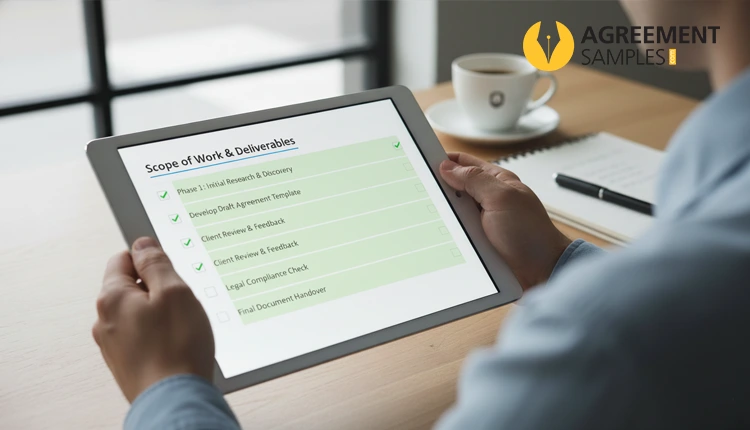
Sample scope of work in an agreement template showing task checklist on a digital tablet

How to do it right:

  • Use bullet points or a numbered list.
  • Be specific about tasks, deliverables, deadlines, and standards.
  • Make sure it’s clear who does what.

4. Payment Terms Clause

Why it matters: Avoids confusion over money.

Payment disputes are common. This clause should clearly state how and when payments happen.
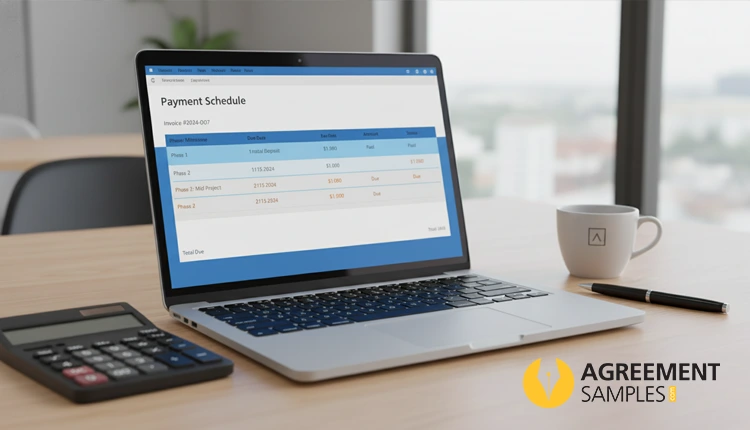
Payment schedule example in an agreement template displayed on a laptop screen

How to do it right:

  • Specify amounts, due dates, and payment methods.
  • Include late fees or penalties if applicable.
  • Mention refund policies if necessary.

5. Term and Termination Clause

Why it matters: Sets the agreement’s duration and explains how it can end.

Everyone needs to know how long the agreement lasts and what happens if it ends early.

Termination clause example in an agreement template showing contract process flowchart

How to do it right:

  • Include start and end dates.
  • Explain the conditions for ending the agreement early.
  • Mention notice periods and any consequences.

6. Confidentiality / Non-Disclosure Clause

Why it matters: Protects private information.

If you’re sharing sensitive information, this clause prevents it from being shared without permission.
Confidentiality clause example in an agreement template showing protected document

How to do it right:

  • Define what counts as confidential information.
  • Explain what each party can and cannot do with that information.
  • State how long confidentiality lasts.

7. Dispute Resolution Clause

Why it matters: Provides a plan for handling disagreements.

This clause helps resolve issues without turning to court immediately, saving time and money.
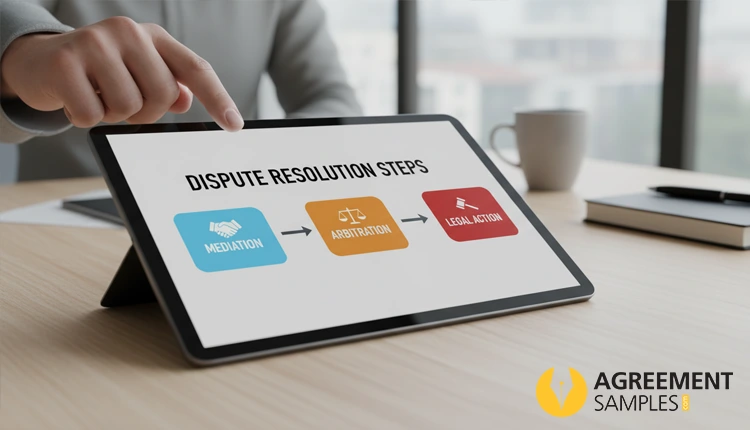
Dispute resolution example in an agreement template showing mediation arbitration and legal steps

How to do it right:

  • Consider mediation or arbitration before legal action.
  • Specify which laws apply and which courts have jurisdiction.
  • Explain the process and timeline for resolving disputes.

8. Liability and Indemnification Clause

Why it matters: Protects parties from potential losses or damages.

This clause explains who is responsible if something goes wrong.

Liability and indemnification clause example in an agreement template with protective shield icon

How to do it right:

  • Specify what liabilities each party accepts.
  • Include indemnity terms to protect each party.
  • Avoid overly broad clauses that could be unfair or unenforceable.

9. Governing Law Clause

Why it matters: Decides which laws apply.

If a dispute arises, this clause prevents confusion by naming which state or country’s laws will govern the agreement.
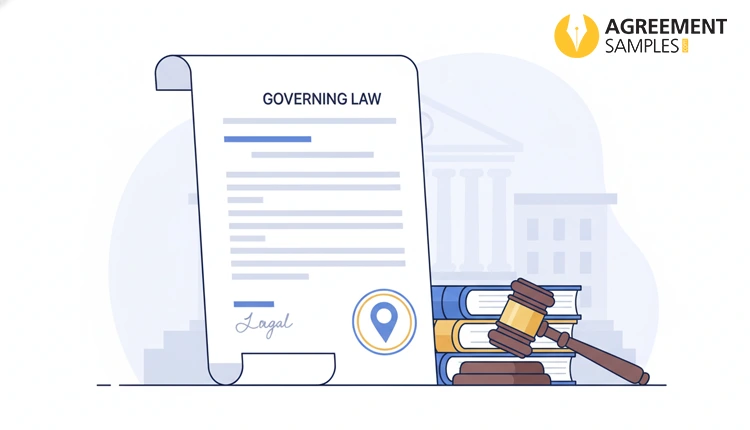
Liability and indemnification clause example in an agreement template with protective shield icon

How to do it right:

  • Clearly state the governing law.
  • Make sure it matches the location of the parties.

10. Miscellaneous / Standard Clauses

Why it matters: Adds extra protection and clarity.

These can cover:

  • Force Majeure (what happens in case of unforeseen events)
  • Entire Agreement Clause (clarifying this is the complete agreement)
  • Amendment Clause (how changes are made)
  • Severability Clause (if part of the agreement is invalid, the rest still counts)

Tips for Using Agreement Templates

  1. Customize everything: Don’t just copy-paste. Make each clause fit your situation.
  2. Keep it simple: Avoid overly complex legal language.
  3. Double-check details: Names, numbers, and dates must be correct.
  4. Ask for help if needed: For high-stakes agreements, a legal professional can prevent problems.

Including these essential clauses ensures your agreement is clear, professional, and legally safer. Free templates are a great starting point, but customization and attention to detail make the difference between a good agreement and a great one.


follow-us-on-pinterest
follow-us-on-facebook